

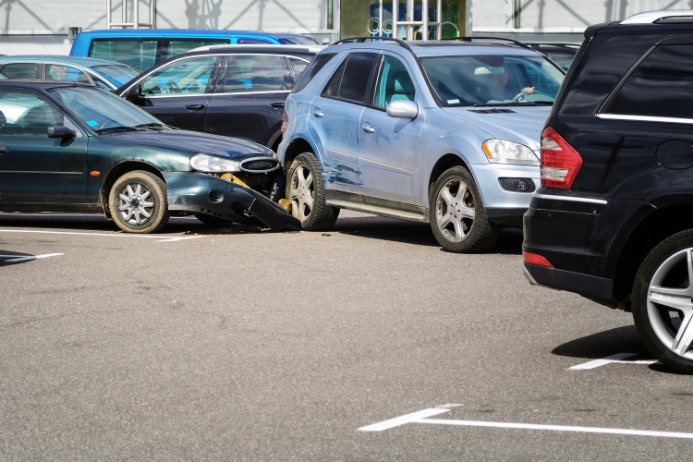
Parking Lot Accidents and the Florida Legal Process
When your parked car is struck in a parking lot, it raises a key question: who is responsible for vehicle damage in a parking lot? Determining liability in these settings can be more complex than a typical road collision.
In a Florida parking lot accident, fault often lies with the driver who hit the vehicle, but in certain situations, property owners, parking lot managers, or others may share responsibility. Understanding how to determine fault, what your rights are, and how an experienced insurance dispute attorney can help is critical if you want a fair insurance claim or compensation.
How Parking Lot Accidents Differ from Road Crashes
Parking lot collisions may seem minor, but they come with unique challenges compared to traditional motor vehicle accidents.
Private Property Rules
Unlike public roads, a parking lot is often private property (mall, office, apartment complex). That means parking lot owners may have a duty under premises liability to maintain safe conditions, proper lighting, signage, and repair hazards.
Traffic Laws Still Apply
While some rules may differ, many traffic laws still govern right-of-way, yield rules, and driver responsibility even in parking lots.
Limited Visibility & Confined Space
Drivers backing up, navigating tight spaces, or leaving parking spots create opportunities for collisions.
Ambiguous Fault Situations
Two cars are backing out, one driver is negligent, and the other is distracted. It’s not always clear who is at fault without evidence.
Common Types of Parking Lot Accidents
In Florida, many drivers carry collision coverage, property damage liability, and uninsured motorist coverage, but the challenge becomes converting that coverage into a fair insurance payout when claims are disputed.
Certain types of accidents tend to happen again and again in Florida parking lots. These often result in insurance disputes or liability claims, especially when damage or injuries are involved:
- Backing collisions, where one or both drivers are reversing
- Sideswipes while maneuvering through tight spaces
- Collisions with parked cars or vehicles stopped in a parking space
- Dooring incidents, where a vehicle door strikes another car
- Pedestrian collisions in walkways or crossings
- Hit-and-run incidents, especially in crowded or poorly lit lots
- Poorly marked speed bumps, curbs, or wheel stops
- Crashes at exit lanes or drive aisles, often due to unclear signage or blocked views
Each of these common parking lot accidents raises different questions about driver negligence, property owner liability, and how fault is assigned under Florida law.
Who Usually Bears Responsibility: The At-Fault Driver
In most parking-lot vehicle damage cases, the law will point to the at-fault driver, or the one whose careless actions caused the crash. Examples include:
- Hitting a parked car while pulling out
- Backing into another vehicle
- Failing to yield while driving through the lot
- Distracted driving (texting, looking away)
Pursuing a claim against the at-fault driver’s insurance company is the standard route. But how much you can recover depends on their policy limits, fault allocation, and whether their insurer disputes liability or the extent of your damage and injury.
Florida’s modified comparative negligence system allows an injured party to recover compensation even if they bear partial fault, so long as they are not more than 50% at fault. (If you’re more than 50% at fault, you may be barred from recovery.)
When Property Owners May Be Held Liable
Although the driver is often responsible, there are scenarios where the parking lot owner or property manager can share liability. Private property owners have a responsibility to maintain their premises for public safety:
Duty to Maintain Safe Conditions
Under Florida premises liability principles, property owners must keep their lots in safe condition, repairing hazards or warning visitors of dangerous conditions. If the property owner failed to properly maintain or fix potholes, uneven pavement, faulty drainage, poor signage, or defective lighting, and those conditions contribute to an accident, they may be held liable.
Unsafe Design or Layout
A parking lot that forces awkward sightlines, lacks clear traffic signage, or has too-narrow aisles may pose foreseeable risks. If the design itself leads to collisions, a property owner or developer might be responsible for negligent layout or planning.
Inadequate Lighting or Obscured Visibility
When lighting is poor, hazards are hidden, or lines are faded, drivers may misjudge distances or blind spots. If these conditions played a role, a property owner who neglected lighting maintenance could share liability.
Lack of Warning Signs or Hazard Marking
If a hazard exists (a deep crack, speed bump, or uneven pavement) and property management fails to put up visible warnings or signage, that failure may support a claim against them. Even if a hazard is “open and obvious,” Florida law does not always absolve property owners, especially when visibility is poor or the danger is not reasonably noticeable.
Negligent Security (When Damage is Intentional)
If your vehicle was vandalized or intentionally damaged (e.g., hit-and-run or deliberate act) and the lot is known for crime, inadequate security, or lighting, it could contribute to liability under premises liability theories. While this veers into property damage rather than driver collision, it is a possible angle in some cases.
However, these property-based claims are harder to prove because they require showing that the condition was known (or should have been known) and that reasonable measures would have prevented the harm.
How Liability Is Determined in Florida Parking Lot Cases
Here are the key legal principles used when determining fault:
- Duty, Breach, Causation, Damages: To succeed, you must show the at-fault party or property owner owed a duty (e.g., to drive safely or maintain the lot), breached that duty, caused your damage, and that you suffered losses.
- Comparative Fault: Florida’s modified comparative fault allows you to recover even if you share some fault, as long as your share is 50% or less.
- Open and Obvious Defense: Insurers or owners may argue that hazards were obvious and avoidable, reducing or eliminating liability. But that defense is weaker when visibility, lighting, or signage is inadequate.
- Proof by Evidence: Surveillance video, witness statements, expert testimony (e.g., in lot design or lighting), maintenance logs, and prior complaints may all be used to prove negligence or defect.
- Insurance Contract Terms: Even if liability is clear, recoverable compensation depends on the limits and terms of the insurance policy of the at-fault driver or your own collision policy.
Steps to Take After a Parking Lot Collision
After an accident in a parking lot, your actions can heavily influence your ability to recover. Here’s what to do:
- Stop and Stay at the Scene: Florida law § 316.061 requires drivers to stop when their vehicle is involved in any crash causing property damage and to return to the scene. Failure to do so can mean criminal penalties and civil liabilities.
- Exchange Information: Get names, phone numbers, insurance info, license plates, and addresses from the other driver. If possible, take contact info from witnesses.
- Document the Scene Thoroughly: Take photos of all vehicles involved (damage to all sides), the overall lot layout, signage, lighting, skid marks, pavement defects, or obstacles. Capture the exact parking spot, distance from lanes, and lighting conditions.
- Report to Law Enforcement When Required: Florida law mandates reporting when damage or medical expenses exceed $500. Whether or not police respond, insist on filing a crash report if the threshold is met.
- Notify Your Insurance Company: Promptly report the accident. Many insurers require “prompt notice” as a condition to cover property damage or injury claims.
- Get Repair Estimates: Obtain quotes from body shops, and preserve all invoices, quotes, and records.
- Seek Medical Attention: Even if you feel okay initially, underlying injuries (soft tissue, whiplash, concussion) may appear later. Document all injuries, treatment, tests, and reports.
- Preserve Evidence: Hold onto anything that may be relevant, including surveillance footage (and any requests for it), maintenance records of the parking lot, prior repair logs of pavement, and lighting logs.
- Speak with an Experienced Attorney: Because parking lot liability can be contested, legal representation early helps safeguard your rights and guide negotiations with insurance companies.
How KFB Law Can Help
If your vehicle was damaged in a parking lot and you’re unsure who is liable or whether insurance will treat your claim fairly, KFB Law is here to guide you.
Our experienced personal injury attorneys will:
- Evaluate who is responsible: the at-fault driver, the other driver’s insurer, or possibly the parking lot owner
- Gather evidence, inspect the scene, request surveillance footage, and consult experts
- Handle communications and negotiations with insurance companies to seek fair compensation
- Advise you on whether to file a personal injury lawsuit if necessary
- Help you recover repair costs, diminished value, medical expenses, and more, if injuries occurred
Every case is unique, and we are committed to advocating for the maximum recovery you deserve under Florida law.
Don’t Let Insurance Undervalue Your Parking Lot Damage
Contact KFB Law for a free consultation
If your car was damaged in a parking lot accident, don’t wait for insurers to undervalue your claim. We will assess who is responsible for vehicle damage in a parking lot, explain your rights, and work with you to build a strong case.
Let our experienced insurance dispute lawyers handle the legal side so you can focus on what matters most: your recovery and peace of mind. Schedule your confidential, free consultation today, and get on the path to healing.